Article
The Evolution of Institutional Value: Prioritizing Clarity Over Brand Prestige
The traditional paradigm of higher education marketing, long centered on exclusivity and institutional prestige, is undergoing a fundamental shift. Data from MeetYourClass’s 2026 College Decision Playbook—encompassing nearly 3,500 prospective students—indicates that "prestige" is being redefined. Modern students, particularly the 44% identifying as first-generation, are prioritizing transparency, measurable outcomes, and institutional fit over historical brand recognition.
The Declining Influence of Selectivity
Quantitative data suggests that selectivity is no longer the primary aspirational marker for the incoming cohort. For the 2026 cycle, a low acceptance rate is often viewed as a barrier to entry rather than a badge of honor.
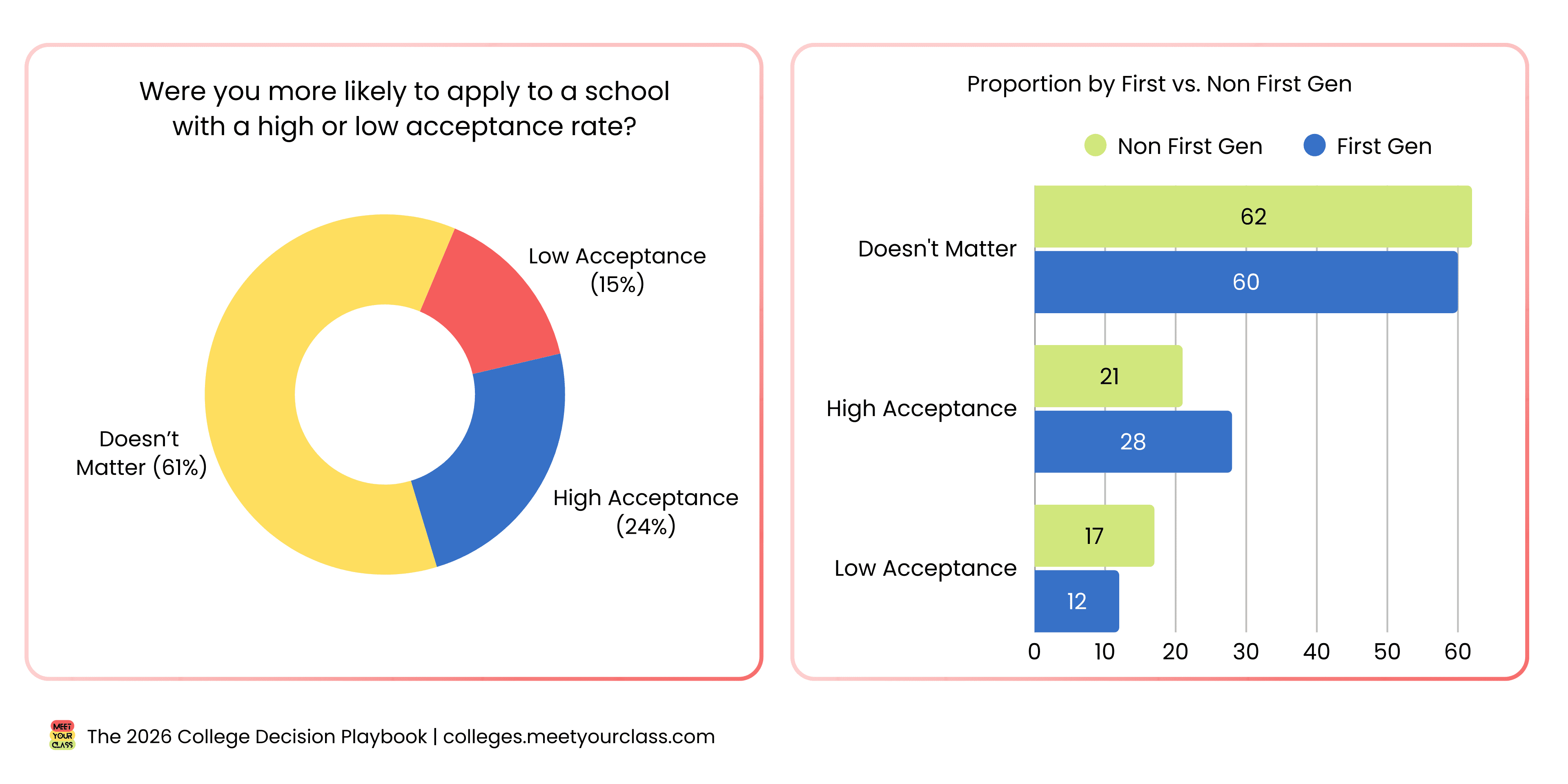
Preference for Accessibility: When evaluating the impact of acceptance rates on application intent, 61% of respondents indicated acceptance rates didn’t matter to them. Among those who did care, a larger segment favored institutions with higher acceptance rates over those with lower ones. Only 15% of the total sample actively sought out highly selective institutions.
Risk Mitigation in First-Generation Cohorts: This trend is more pronounced among first-generation students, 28% of whom prefer higher-acceptance institutions (compared to 21% of their non-first-generation peers). For these students, high selectivity is perceived as an unnecessary risk to their enrollment journey.
The Erosion of Traditional Rankings
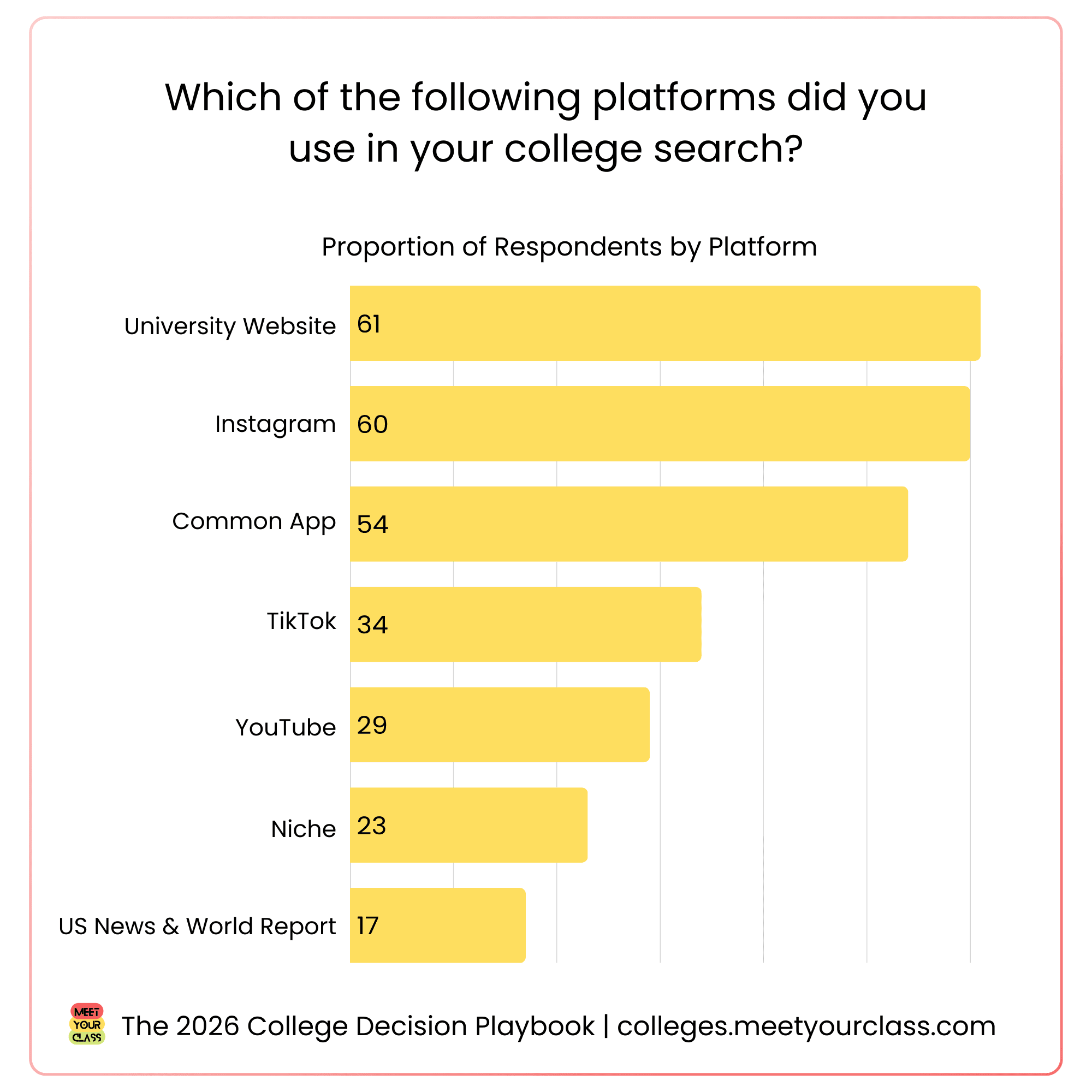
The influence of legacy ranking platforms, such as U.S. News & World Report and Niche, continues to diminish. Usage of these platforms has declined year-over-year, replaced by a preference for direct and social validation.
Primary Research Channels: University websites and Instagram have emerged as the dominant tools for institutional research, each utilized by approximately 60% of respondents (the highest reported platforms).
Verification via Authenticity: Students are increasingly cross-referencing official institutional messaging against peer-led social content. They value "lived experience" and student voices over numerical hierarchies.
Process Complexity as a Barrier to Entry
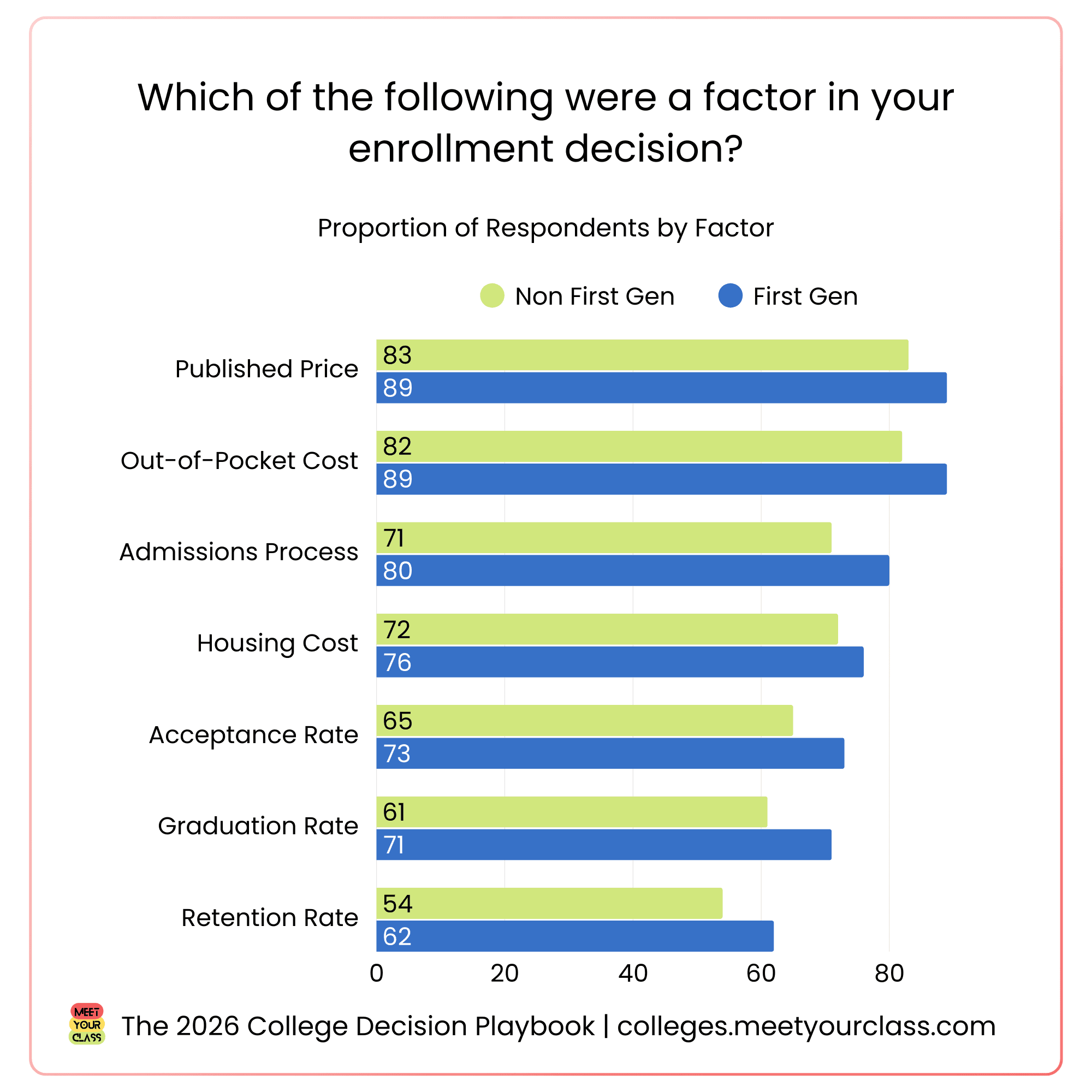
While selectivity may not deter some students, administrative complexity does. Seventy-five percent of respondents cited the complexity of the admissions process as a consideration in their enrollment decision, a figure that rises to 80% among first-generation students.
For many, the difficulty of navigating applications, essays, and timelines functions as a deterrent. Consequently, institutions that prioritize clear communication and streamlined processes gain a competitive advantage by reducing the perceived risk of the application journey.
Return on Investment (ROI) as the Primary Metric
The most significant trend identified in the 2026 data is the transition toward outcome-based evaluation. Students are scrutinizing institutional value through the lens of career readiness and academic persistence.
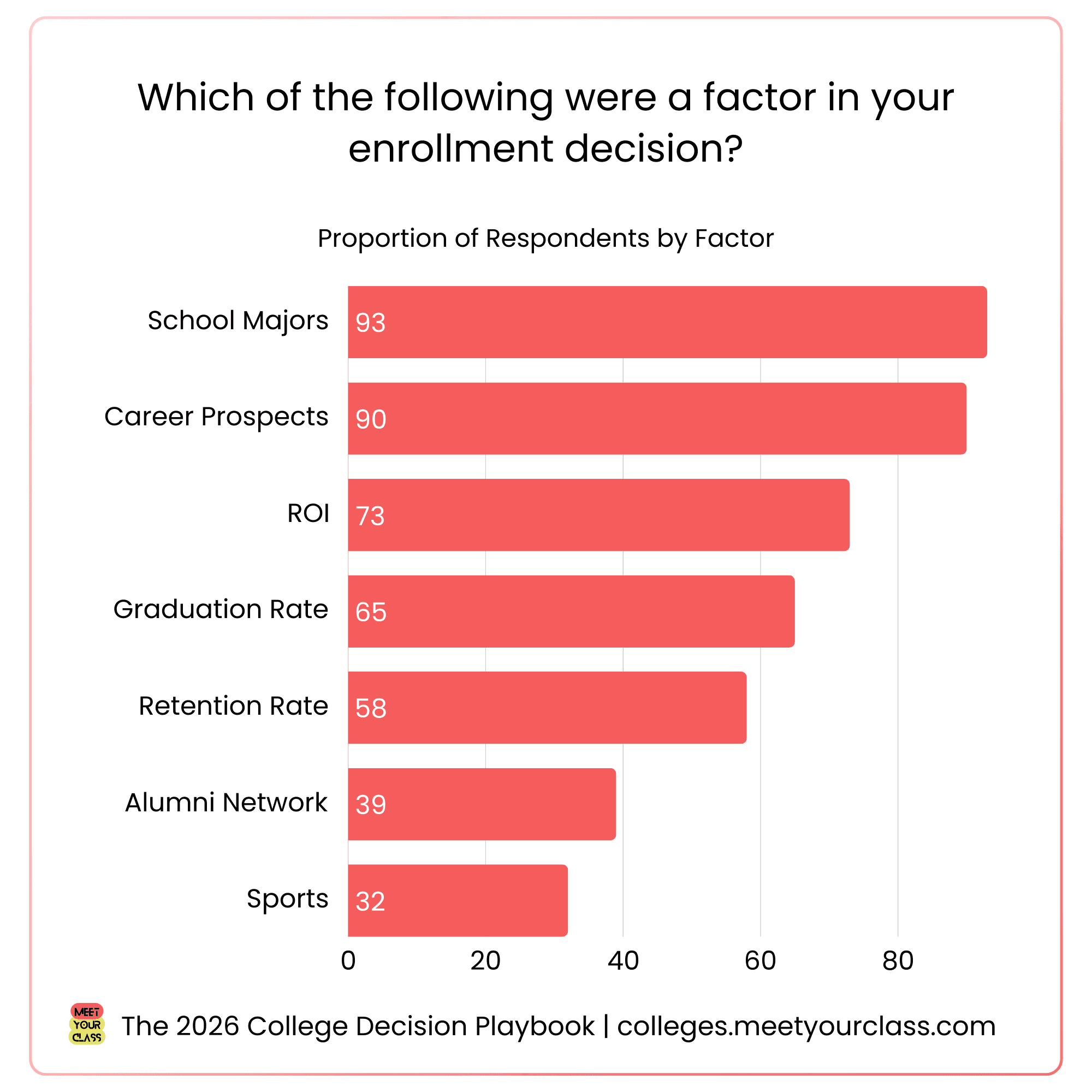
Academic Alignment: 93% of students identified "majors offered" as their top decision factor, with 70% selecting their field of study prior to selecting an institution.
Performance Metrics: The importance of retention rates as a decision factor nearly tripled year-over-year, rising from 20% to 58%. Seventy-three percent of respondents considered ROI in their enrollment decision.
Accountability: Students are increasingly demanding data-backed evidence that an institution can facilitate graduation and long-term career mobility.
Strategic Implications for Upcoming Gen Alpha
These shifts are a direct reflection of the developmental context of Generation Alpha. Having matured during a period of significant global and economic volatility, this cohort exhibits a heightened desire for stability and predictability.
In this new landscape, exclusivity is often interpreted as an unnecessary risk. Instead, Gen Alpha gravitates toward:
Demonstrable Outcomes: Tangible proof of post-graduate success.
Psychological Safety: Environments where they feel an immediate sense of belonging.
Transparent Systems: Clear pathways from admission to graduation.
Conclusion: A New Hierarchy of Prestige
The findings of the 2026 College Decision Playbook suggest that institutional ambition has been recalibrated around pragmatism. While prestige remains a factor, it is no longer synonymous with exclusivity. In the current market, prestige is earned through transparency, measurable results, and a commitment to student success. Institutions that successfully communicate clarity and ROI will be best positioned to attract the next generation of scholars.


