Article
The 2026 Melt Mitigation Playbook: A Data-Driven Guide for Your Transition Team
Melt Is Part of the Decision Process
Summer melt is not a separate phase that begins after May 1. It is a continuation of how students make enrollment decisions. Insights from the 2026 College Decision Playbook, based on ~3,500 students, show that many students are still evaluating cost, academic fit, and campus experience well into the summer.
A key data point illustrates this clearly. Twenty percent of students submitted deposits to more than one institution. Of respondents that submitted more than one deposit, 64% were still comparing financial aid and scholarship offers, 59% were still assessing academic fit, and 56% were still assessing campus culture fit.
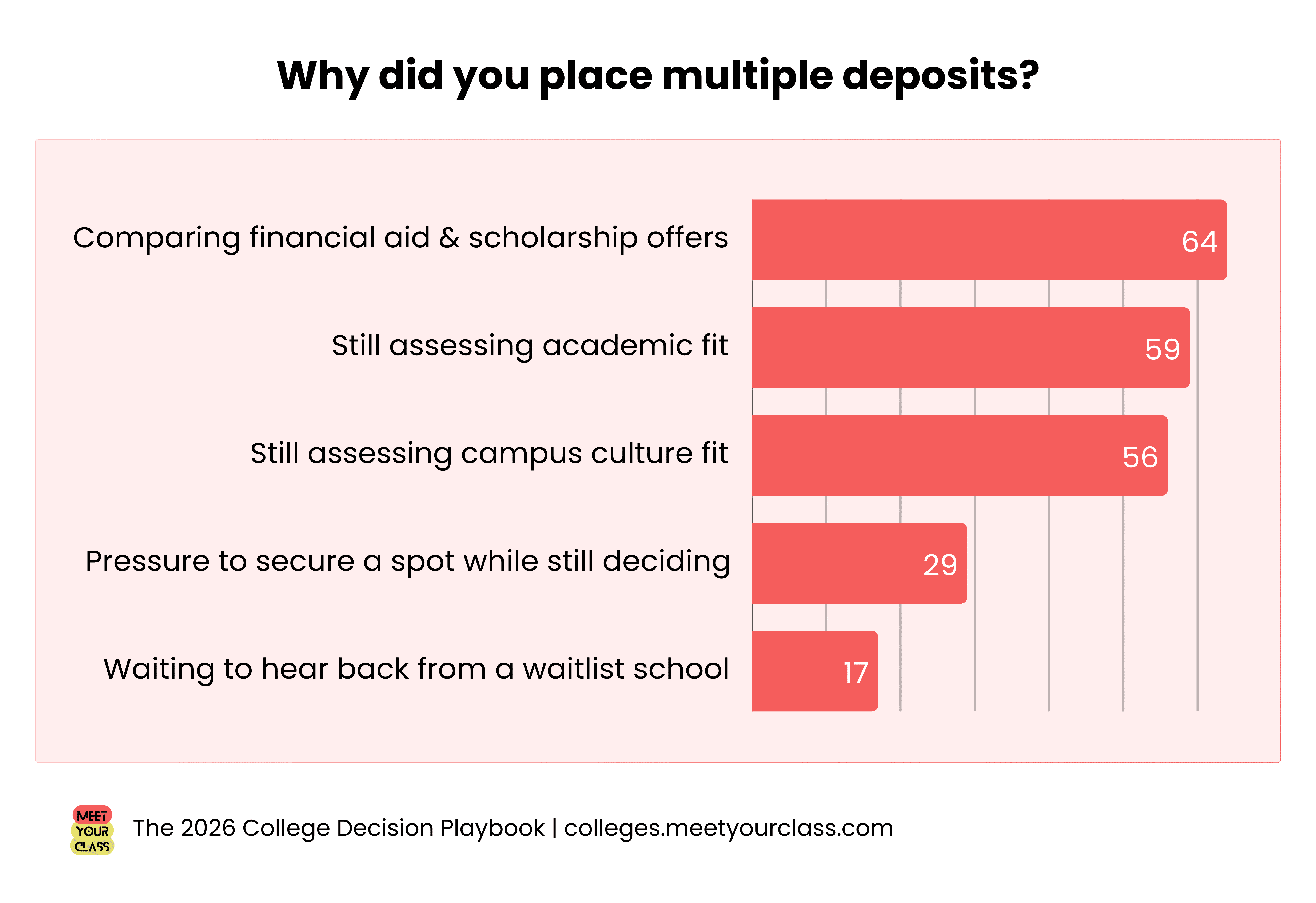
These numbers reinforce that the time between deposit and move-in remains an active and influential decision window.
Why Students Continue Evaluating After Depositing
Several consistent themes explain why students hold multiple options open.
Financial clarity remains a primary factor. Cost is one of the most important drivers in the decision process, with:
85% of respondents citing published tuition as important
84% citing out-of-pocket cost as a key factor
Without a clear understanding of what they will actually pay, students continue comparing options after depositing.
Students are also still forming a sense of fit. Academic programs and future outcomes are central to decision-making, and many students continue evaluating these elements throughout the summer.
Social belonging is equally important. The survey found:
98% of students try to meet peers before arriving on campus
50% begin doing so before they even commit
86% of students cited “campus vibe” as a key deciding factor
This highlights that connection and community are not orientation outcomes—they are part of the enrollment decision itself and should be built early.
The Importance of a Transition Team Model
To support students through this extended decision period, institutions can benefit from assigning a dedicated Transition Team. This team bridges the gap between admissions and orientation, maintaining consistent engagement from the point of deposit through arrival. This is particularly important when admissions teams need to shift gears to focus on recruiting the next incoming class during the summer.
Rather than shifting responsibility between offices, the Transition Team provides continuity. Their role is to guide students, answer questions, and reinforce confidence throughout the summer.
Core areas of focus typically include:
Ongoing financial communication and support
Peer connection and community building
Connecting students with their academic programs and advisors
Structured outreach and engagement
Early orientation exposure
This model aligns with how students behave today—continuing to evaluate and seek reassurance after depositing.
Building a Strong Post-Deposit Experience
A successful transition strategy is grounded in clarity, consistency, and connection.
Financial Communication
Students and families benefit from continued guidance after receiving aid offers. This is especially important given that financial comparison is the leading reason for multiple deposits.
Institutions can support this by:
Offering opportunities to review and understand financial aid packages
Providing clear explanations of cost, timelines, and payment options
Making support easily accessible through virtual or one-on-one formats
When students understand their financial commitment, they are more confident moving forward.
Creating Belonging Early
Connection with peers is a central part of the enrollment experience. Students are actively seeking these interactions before arriving on campus.
In addition to the 98% who try to meet peers, the survey found that 92% of students are more likely to enroll if a campus has a strong sense of community.
Institutions can facilitate this by creating spaces, online and in-person, where students can:
Meet future classmates
Engage in conversations
Begin forming relationships
These early connections help students feel a sense of belonging well before orientation begins.
Supporting Academic Fit and Confidence
Academic fit remains one of the most important factors in a student’s final decision. The survey found that 93% of students consider majors offered as a key driver, and 70% choose their major before selecting a college. Even after depositing, students may still be evaluating whether their academic path aligns with their goals.
Institutions can reinforce confidence in academic fit by continuing to engage students around their intended program and future outcomes.
Effective strategies include:
Connecting students with faculty, advisors, or current students in their intended major
Offering virtual academic previews, such as sample lectures or program overviews
Highlighting career pathways, internships, and alumni outcomes tied to specific majors
Providing guidance for students who are undecided or considering changing majors
These touchpoints help students better understand what their academic experience will look like and how it connects to their long-term goals. Continued exposure to academic resources and support also reassures students that they will be guided if their interests evolve.
Engaging Families in the Process
Families continue to play an important role in enrollment decisions. The survey shows that nearly 90% of students report parental influence in their decision-making
Providing families with clear, accessible information helps reinforce confidence in the student’s choice. Opportunities to engage—such as webinars or informational sessions—allow families to better understand the process and support their students effectively.
Starting Orientation Before Arrival
Orientation does not need to begin on move-in day. Students show strong interest in early exposure to campus life and activities.
The survey found:
65% of students want campus tours included in orientation
High interest in clubs, organizations, and social events prior to arrival
Early exposure helps students visualize their experience on campus, build excitement about attending, and reduce uncertainty about what to expect. This creates a smoother transition into the formal orientation experience.
Identifying Students Who Need More Support
One of the challenges in managing melt is knowing which students require additional attention. Traditional indicators often appear late, limiting the ability to respond effectively. When potentially 20% of your deposited students are still considering other institutions, this creates a lot of uncertainty around what your final enrollment will look like.
MeetYourClass provides earlier insight through student behavior and engagement patterns, rather than waiting until move in day or cancellations are sent.
Key signals include:
Participation in student communities and student reported commitment statuses on MeetYourClass and Instagram
Profile completion and interaction
Activity across multiple institutions, providing in-cycle cross-app information
These behaviors offer a clearer picture of student intent and confidence.
MeetYourClass data shows:
Students who “verbally commit” to an institution, enroll 94% of the time
Students using MeetYourClass were 55.1% less likely to melt
71% of survey respondents who used MeetYourClass said the platform influenced their enrollment decision
These insights allow institutions to prioritize outreach to students most likely to melt, and provide timely, personalized support.
A More Connected Path to Enrollment
The period between deposit and arrival is a critical part of the student journey. Students are still evaluating cost, fit, and belonging, and their confidence can shift during this time.
Institutions that approach this phase with intention create a more consistent and supportive experience. By establishing a Transition Team, maintaining structured engagement, and using data to guide outreach, enrollment teams can better support students through this phase and ensure a stronger path from deposit to day one.


